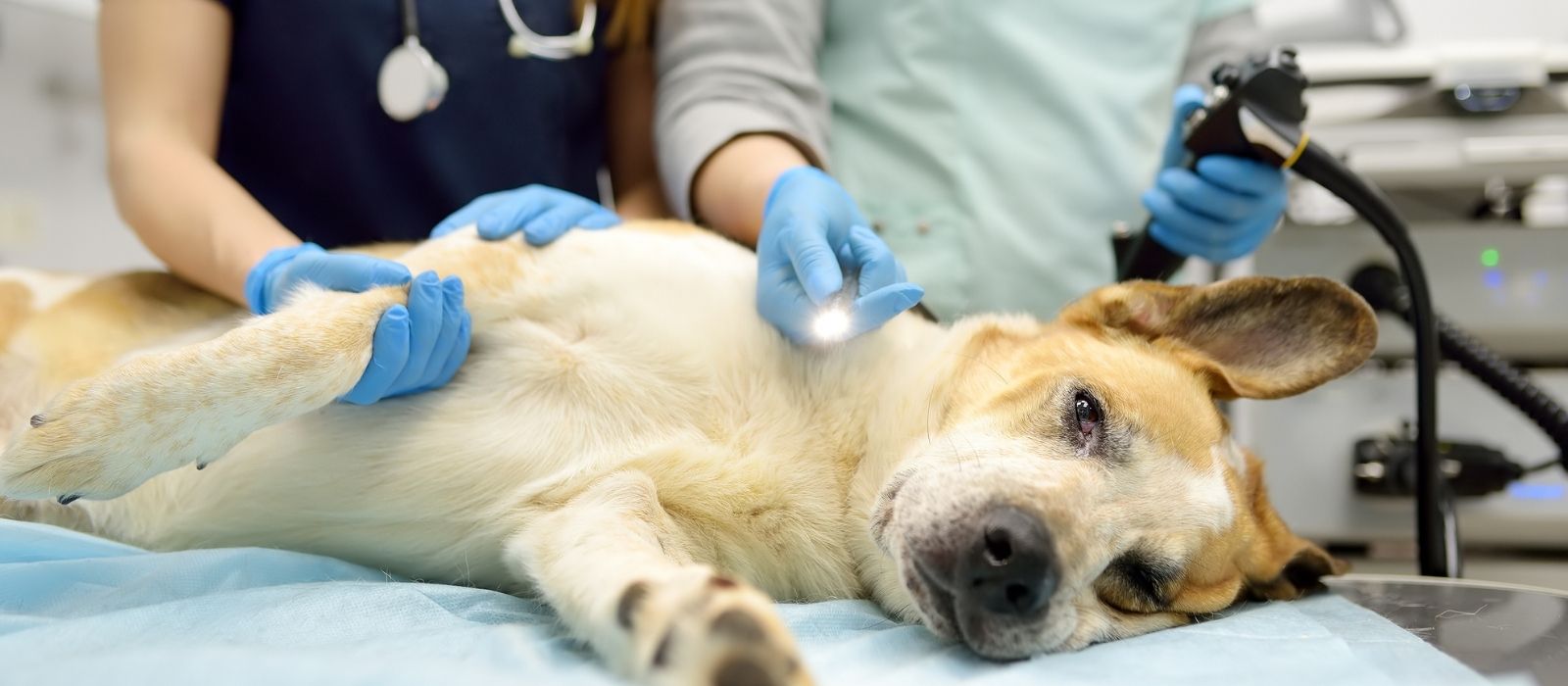
It's 11pm on a Saturday. Your dog is panting and can't get comfortable. You call your regular vet and get a recording. So you load her into the car and drive to the emergency animal hospital, which you've never been to before, and you're already dreading what this is going to cost.
That dread is well-founded. Emergency vet visits in Canada cost significantly more than regular appointments, and the premium is real. After-hours care isn't just a different schedule. It's a different price structure entirely, and most owners find out the hard way.
Here's what you're actually looking at before you walk through that door.
The Emergency Exam Fee: What You Pay Just to Walk In
Most 24-hour emergency animal hospitals charge a triage or exam fee the moment you arrive. This is separate from any treatment. You're paying for the emergency vet to assess your pet, full stop.
That fee ranges from about $150 to $350 CAD, depending on the city and the hospital. Toronto and Vancouver sit at the higher end. Smaller cities in the Prairies or Maritimes tend to be a bit lower, though not dramatically. Some hospitals charge a flat emergency fee regardless of severity. Others tier it: stable patient versus urgent versus critical.
You pay that fee even if the vet examines your dog, says everything looks fine, and sends you home. No exceptions. That's something nobody warns you about the first time.
Nights, Weekends, and Holidays: The Actual Multipliers
Weekday business hours are the cheapest time to need a vet. Everything else costs more. Here's what the premium looks like across common scenarios:
| Visit Type | Estimated Cost (CAD) | Notes |
|---|---|---|
| Regular daytime exam | $80 – $150 | Your regular vet, business hours |
| After-hours emergency exam | $150 – $350 | Triage fee alone, before treatment |
| Weekend emergency exam | $200 – $400 | Saturday/Sunday premium at most hospitals |
| Stat holiday emergency exam | $250 – $500+ | Christmas, Easter, long weekends |
| Full emergency workup (bloodwork, x-ray, fluids) | $800 – $2,500 | Depends heavily on what they find |
These are ranges, not guarantees. A visit that starts with a triage fee can climb fast once diagnostics start. Bloodwork runs $150 to $300. X-rays add another $200 to $400. If your pet needs IV fluids and overnight monitoring, you're looking at $400 to $800 more on top of everything else.
The CVMA pet health resources recommend keeping a copy of your pet's medical records accessible at home for exactly this reason: emergency vets can avoid repeat diagnostics if they know what's already been ruled out, which saves you real money.
What Drives the Bill Up (Beyond the Exam)
The exam fee gets you in the door. What happens next depends on what the vet finds, and that's where the costs branch unpredictably.
Suspected toxin ingestion usually means induced vomiting and activated charcoal, running $200 to $500 depending on timing and what was ingested. Breathing difficulty often triggers oxygen support and chest x-rays before anyone has a diagnosis. Suspected bloat goes straight to x-ray and, often, emergency surgery, which can run $3,000 to $7,000 CAD at an emergency hospital. That's a different conversation entirely.
Pain management, catheter placement, and sedation for diagnostics all get itemized separately. Emergency hospitals operate on a line-item billing model. Each intervention has its own price. Most will give you an estimate before proceeding, and you have the right to ask for one. If a technician hands you a treatment plan without a cost breakdown attached, ask for it. That's not rude. That's how this works.
If the costs are climbing toward surgery, it helps to know the fuller picture. Our breakdown of dog surgery costs in Canada gives realistic ranges for common procedures, so you're not negotiating blind at midnight.
City-by-City: The Geography of Emergency Care
Where you live shapes what you pay. Urban centres with multiple 24-hour hospitals have more competition, but they also have higher operating costs and more demand. Rural areas often have no emergency animal hospital within two hours, which means a long drive before the bill even starts.
In Toronto, emergency exam fees at hospitals like the Toronto Veterinary Emergency Hospital run toward the higher end of that $200 to $350 range. Vancouver is similar. Calgary and Edmonton are slightly lower on average, but not by much. In smaller Ontario cities or rural Nova Scotia, your options may be limited to whichever clinic has an on-call vet, and pricing varies widely because there's no competition setting the floor.
Quebec has an additional consideration: the province has distinct licensing requirements for veterinary specialists, and after-hours pricing can be higher in Montreal because fewer facilities offer 24-hour small animal emergency care. If you're in a smaller Quebec city, your nearest emergency option may be in a different city entirely.
The honest answer is that there's no national standard. Emergency vet pricing in Canada is unregulated. Each hospital sets its own fees.
When to Go Immediately (And When to Wait Until Morning)
This is the question that costs people money in both directions. Going to emergency for something that could wait until your regular vet opens means paying $200 to $400 for an after-hours exam. Waiting on something that shouldn't wait can mean a much worse outcome and a much larger bill.
Go immediately for: laboured breathing, suspected poisoning, collapse or extreme weakness, seizures lasting more than two or three minutes, suspected bloat in deep-chested dogs, eye injuries, inability to urinate (especially in cats), obvious severe pain, and significant trauma like being hit by a car. These don't improve by morning.
Vomiting is trickier. A dog or cat that vomits once and then acts normally is usually okay to monitor overnight. But a cat that keeps vomiting, won't eat, and is becoming lethargic is a different situation. Our piece on when cat vomiting is serious walks through the specific signs that mean you shouldn't wait.
Limping is another grey zone. A dog who's weight-bearing but sore can usually wait for a morning appointment. A dog who won't put any weight on a leg and is in obvious pain probably shouldn't wait ten hours.
Hard to say exactly where the line is in every case. But if you're genuinely unsure at midnight, calling the emergency hospital's triage line costs nothing. Most will talk you through the symptoms and tell you honestly whether you need to come in.
Pet Insurance and Emergency Costs: The Gap Most Plans Have
Pet insurance covers emergency care at most Canadian providers, but the reimbursement model matters. Most plans in Canada work on a reimbursement basis: you pay upfront, then submit the claim. At a $1,500 emergency bill, that's real money out of pocket before you see anything back.
Deductibles apply. If your annual deductible is $500 and your emergency bill is $800, you're out $500 either way. Some plans also have per-incident deductibles rather than annual ones, which changes the math again. Read the policy before the emergency, not after.
CareCredit and Scratchpay both operate in Canada and offer short-term financing for vet bills, often with zero-interest periods. Some emergency hospitals have relationships with these providers and will mention them. Others won't bring it up unless you ask. Ask.
What nobody fully resolves is the gap between what insurance reimburses and what emergency care actually costs. Even with good coverage, a serious emergency often leaves owners absorbing $400 to $800 out of pocket after deductibles and coverage limits. That's the number most people aren't mentally prepared for.