Your dog is getting up slower than they used to. They hesitate at the bottom of the stairs. On cold mornings, they're stiff for the first twenty minutes, and you've started watching them move in a way you never had to before. That's usually how hip dysplasia announces itself. Not dramatically. Just as a slow, nagging change you can't quite ignore anymore.
Hip dysplasia means the ball and socket of the hip joint don't fit together properly. Instead of gliding, the joint grinds. Over time, that grinding causes cartilage loss, inflammation, and eventually arthritis that compounds every winter. If you live anywhere north of Toronto, that's most of the year.
The Merck Veterinary Manual describes hip dysplasia as one of the most common skeletal diseases in dogs, with large and giant breeds carrying the highest risk. But size alone doesn't tell the whole story.
Which Breeds Are Actually at Risk
German Shepherds, Golden Retrievers, Labrador Retrievers, and Bernese Mountain Dogs show up consistently in dysplasia data. According to the Canadian Kennel Club, Labs and Goldens are among the top five most registered breeds in Canada year over year. That makes hip dysplasia one of the most common orthopedic problems Canadian vets see.
Rottweilers, Saint Bernards, Great Danes, and Newfoundlands are also high on the list. Newfoundlands especially, given how popular they are in Atlantic Canada. Smaller breeds aren't immune either. Bulldogs and Pugs have higher rates than most people expect, largely due to body structure.
Genetics is the primary driver. But weight, growth rate, and how much high-impact exercise a puppy does before their growth plates close all play into how severe the outcome gets. A predisposed puppy who stays lean and avoids repetitive jumping through adolescence has better odds than one who doesn't. Nobody tells you this clearly enough when you're picking out an eight-week-old Lab.
What the Symptoms Look Like in Practice
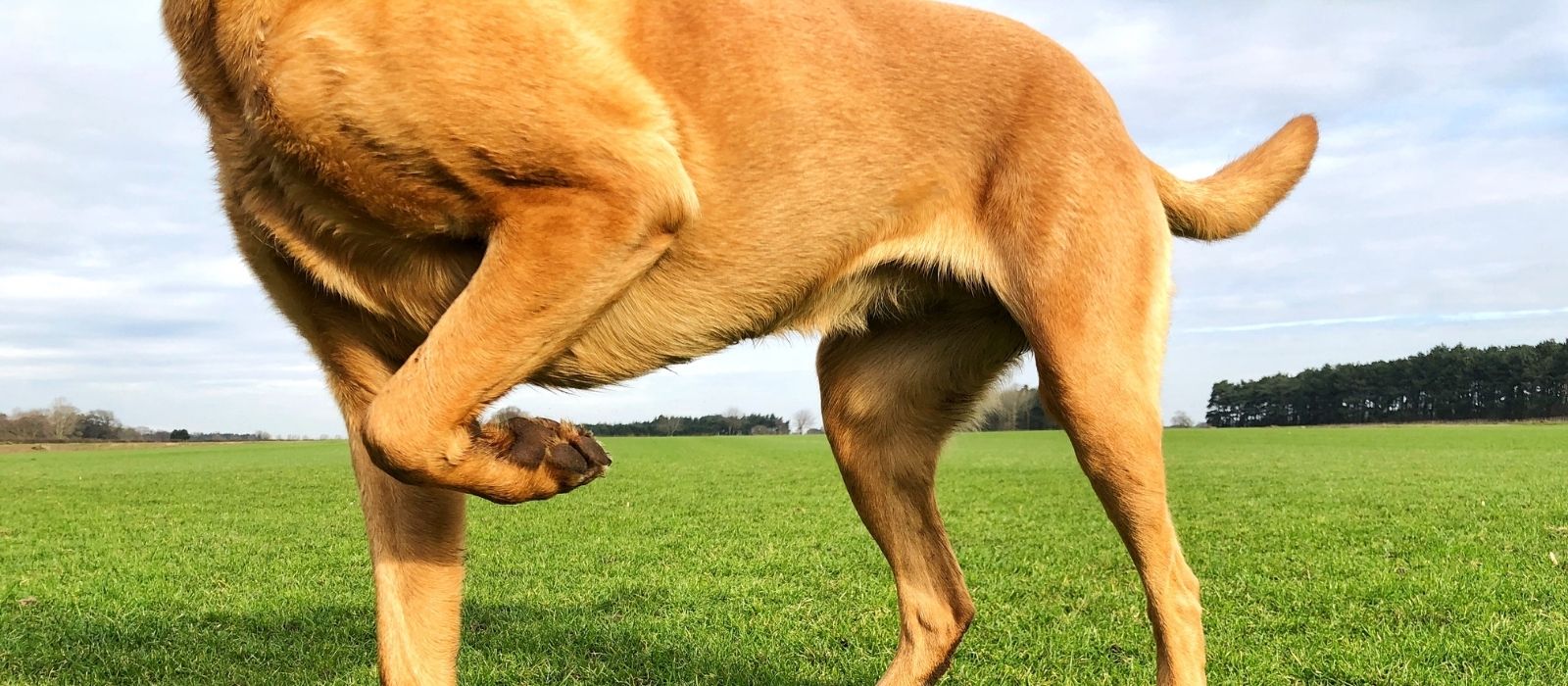
Stiffness after rest is usually the first sign owners notice. The dog gets up slowly, takes a few steps to warm up, then seems fine. Owners chalk it up to sleeping in a weird position. Months pass.
Other signs to watch for:
Bunny hopping when running — both back legs move together instead of alternating. It looks almost playful. It's not.
Reluctance to climb stairs, jump into a car, or get up from hard floors. These aren't laziness. They're pain-avoidance behaviors.
Muscle loss in the hindquarters. Dogs with chronic hip pain shift weight forward. The hind muscles atrophy from underuse. You can see it when you compare the back end to how it used to look.
Audible popping or clicking from the hip. Not always present, but when it shows up, get an X-ray.
If your dog is limping outright, that's worth reading up on separately. The decision about whether a dog limping is urgent or something you can monitor overnight changes based on which leg, how suddenly it started, and whether there's swelling involved.
Getting a Diagnosis in Canada
X-rays confirm the diagnosis. Your vet will take them with the dog in a specific extended position, usually under sedation. The images show how the ball sits in the socket and whether arthritis has already started. Expect to pay $200 to $400 CAD for the sedation and X-rays together, though this varies by province and clinic. Urban Ontario and BC tend to run higher. Rural Saskatchewan or Manitoba, somewhat lower.
PennHIP is the most precise screening method available. It measures joint laxity and gives a score that predicts arthritis risk more accurately than standard hip-extended views. Not every clinic offers it. University teaching hospitals, including the Ontario Veterinary College at the University of Guelph, typically do. Worth asking if you want the full picture, especially if you're deciding whether to pursue surgery.
Responsible breeders screen breeding dogs for hip scores before producing a litter. If you bought a large-breed puppy and the breeder couldn't show you OFA or PennHIP scores for both parents, you weren't given the information you needed. That's a $5,000 to $8,000 surgery bill that may have been predictable from day one.
Treatment: What Actually Helps and What You're Just Paying For
There's no cure. That matters to say clearly upfront. Management is the goal, and the options exist on a spectrum from conservative to surgical.
Weight management is the highest-return intervention, full stop. Every extra kilogram your dog carries is more load on a joint that already doesn't fit right. It costs nothing to cut portions and it matters more than most supplements combined.
Controlled exercise helps too. Consistent, low-impact movement keeps the supporting muscles strong. Swimming is the textbook recommendation. It's also useless advice if you live in Saskatoon in February. Leash walks on flat ground, short and regular, are realistic for most of the country for most of the year.
NSAIDs (non-steroidal anti-inflammatory drugs) are the most common pain management tool. Meloxicam is widely prescribed in Canada and costs roughly $30 to $60 CAD per month depending on dog size and pharmacy. Long-term use requires bloodwork every six months to monitor kidney and liver function. That's another $80 to $150 CAD per test. Plan for it.
Adequan injections (polysulfated glycosaminoglycan) are sometimes used to slow cartilage breakdown. The loading series runs roughly $60 to $120 CAD per injection for the initial eight injections. Some dogs respond noticeably. Some don't. Your vet won't know which until you're already several hundred dollars in.
Joint supplements like glucosamine and fish oil are everywhere. The evidence is modest. They're unlikely to hurt, and some dogs with mild disease seem to do better on them, but they're not replacing NSAIDs in a dog who's already painful.
| Treatment | Approx. Cost (CAD) | Notes |
|---|---|---|
| X-rays + sedation | $200–$400 | One-time diagnostic |
| NSAIDs (monthly) | $30–$60/month | Ongoing; add bloodwork every 6 months |
| Monitoring bloodwork | $80–$150/test | Required for long-term NSAID use |
| Adequan loading series | $480–$960 total | 8 injections; results vary |
| Total hip replacement (THR) | $5,000–$8,000/hip | Referral specialist; best long-term outcome |
| FHO surgery | $1,500–$3,000 | Removes femoral head; better for smaller dogs |
Surgery becomes the conversation when pain management stops working or when the dog is young and the joint damage is severe. Total hip replacement delivers the best functional outcome for large dogs and costs $5,000 to $8,000 CAD per hip at a referral specialist. Femoral head and neck ostectomy (FHO) is a cheaper option at $1,500 to $3,000, more appropriate for smaller dogs or as a last resort when THR isn't financially possible. The outcomes aren't the same. Worth understanding the difference before you're in that exam room.
If you're already feeling the sticker shock, it's worth reading about why Canadian vet bills run higher than in the US and whether pet insurance makes sense for your situation before surgery becomes a possibility rather than a hypothetical.
Living With It Long-Term
Hip dysplasia is a condition you manage for years, not months. The dog who's comfortable at five may be struggling significantly at nine. Cold weather accelerates the stiffness. Wet seasons in BC can be just as hard on arthritic joints as a Manitoba winter. Orthopedic beds matter. Ramps instead of stairs matter. Keeping the dog warm overnight matters.
Acupuncture and laser therapy get mentioned often. The evidence is mixed. Some owners swear by acupuncture for pain management in dogs who can't tolerate NSAIDs long-term. Hard to say exactly how much of that is placebo effect on the owner versus genuine relief for the dog. If you've exhausted the conventional options and your dog is still uncomfortable, it's not a ridiculous thing to try.
The harder question is what you do when management stops being enough. That's a genuinely difficult conversation, and it lands differently depending on whether you have a five-year-old dog or a twelve-year-old one. Senior dog care at end-stage joint disease involves a lot of judgment calls about quality of life that no article can make for you. Your vet can help, but you're the one who watches this dog every day.
What's clear: the earlier you catch it, the more options you have. A dog diagnosed at two with mild laxity has a different trajectory than one diagnosed at seven with bilateral arthritis already entrenched. Annual X-rays for high-risk breeds from age one or two aren't overkill. They're how you stay ahead of it.